
Page-builder blocks.
Without the page-builder weight.
Six Gutenberg-native blocks — Section, Container, Text, Buttons, Info Box and Spacer. Each one inherits your theme, emits only the markup it actually uses, and adds nothing your visitors have to download.
Most block plugins ask you to move in.
They bring their own colours, their own buttons, their own scripts and their own markup — and they leave all of it in your pages whether you used it or not. Deactivate one and the site falls apart.
GutoFlow starts from your theme instead. Colours, fonts and buttons come from your theme.json until you deliberately override them. An unused control emits nothing at all — no icon wrapper on a card without an icon, no stylesheet for a block you never placed.
The blocks
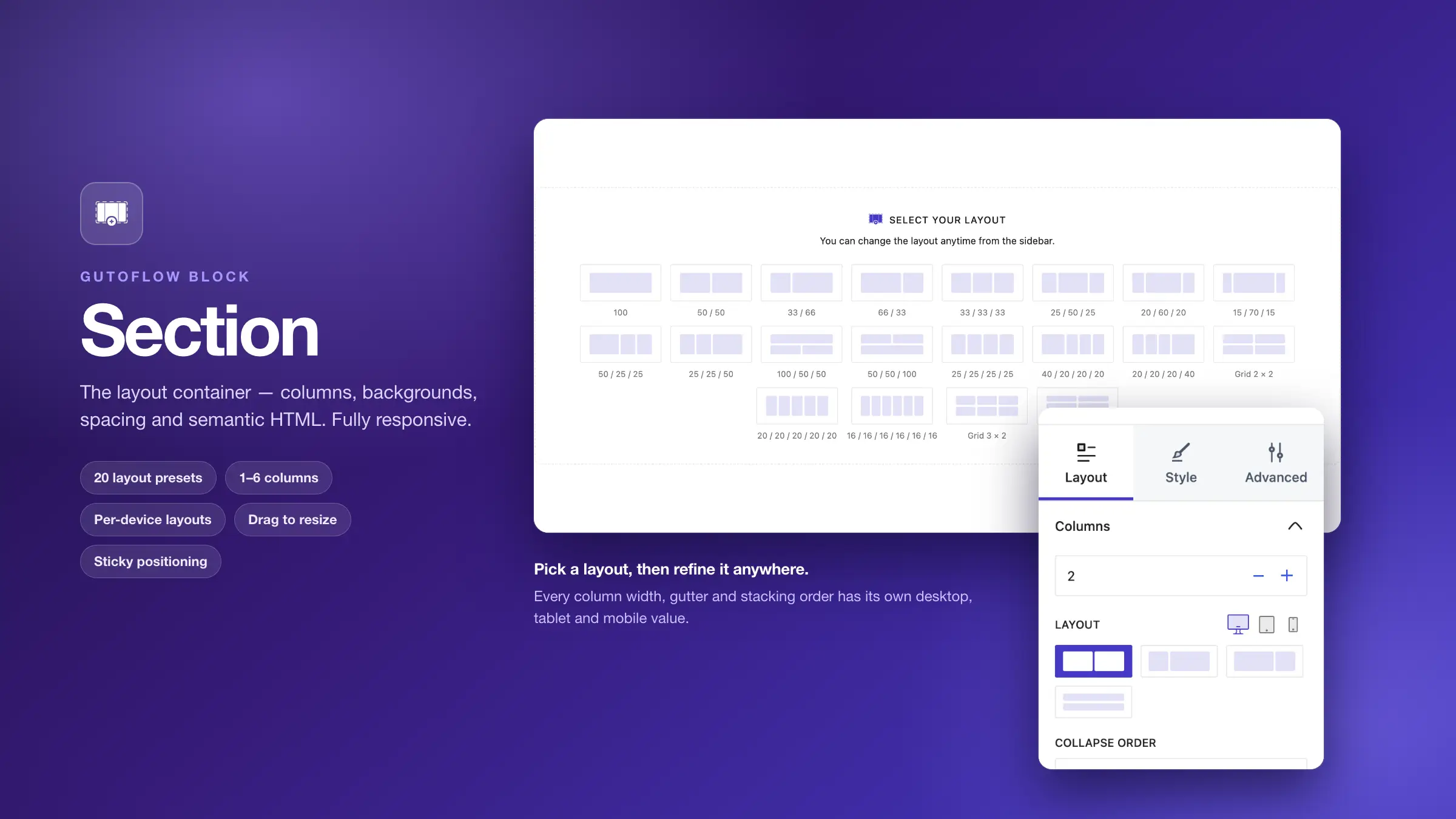
Section
1–6 columns with a visual layout picker, per-device layouts, backgrounds, shape dividers and sticky positioning. Drag padding directly on the canvas.
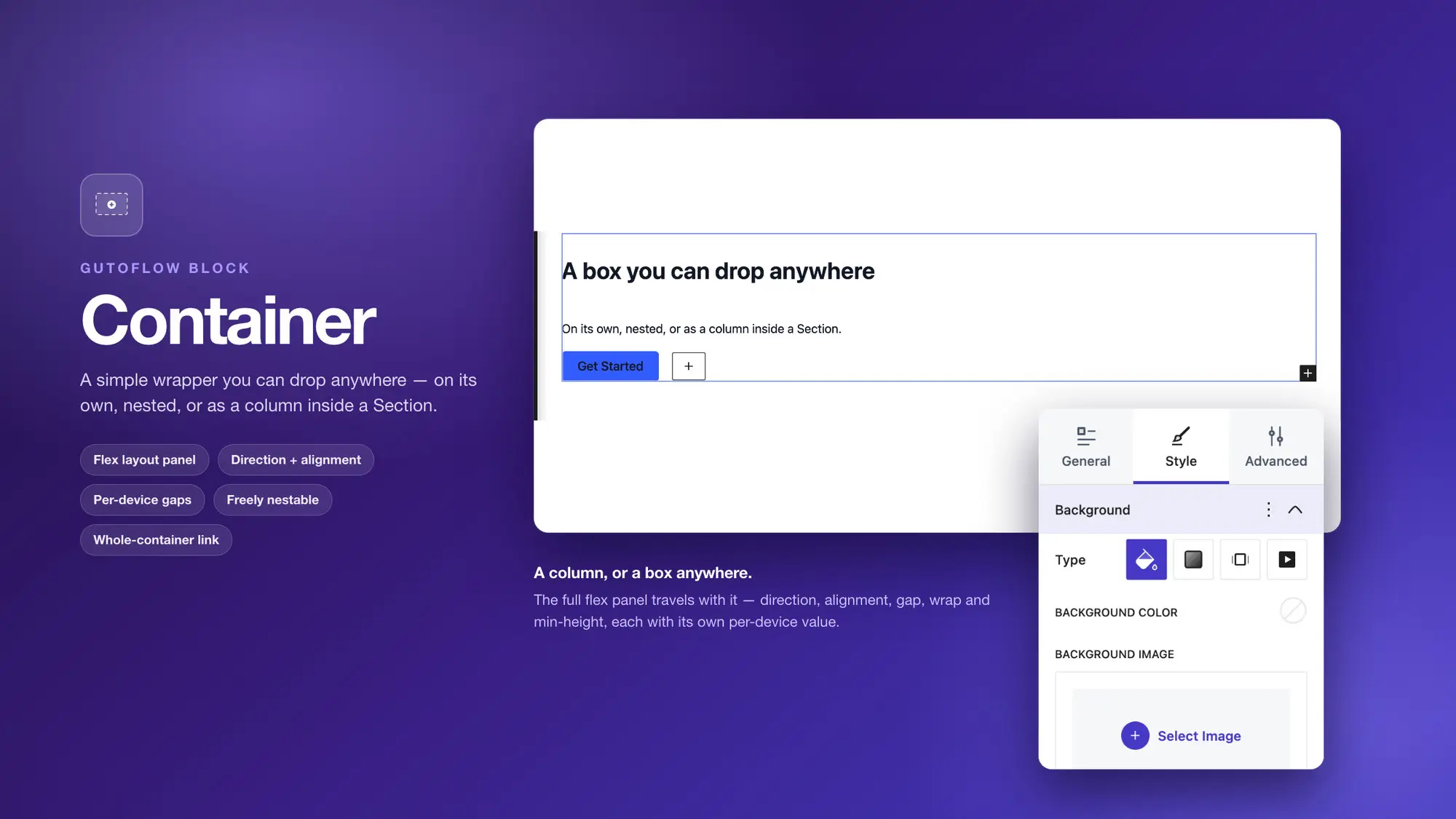
Container
A column inside a Section, or a standalone box anywhere. Nests freely, with a full flex panel per device.
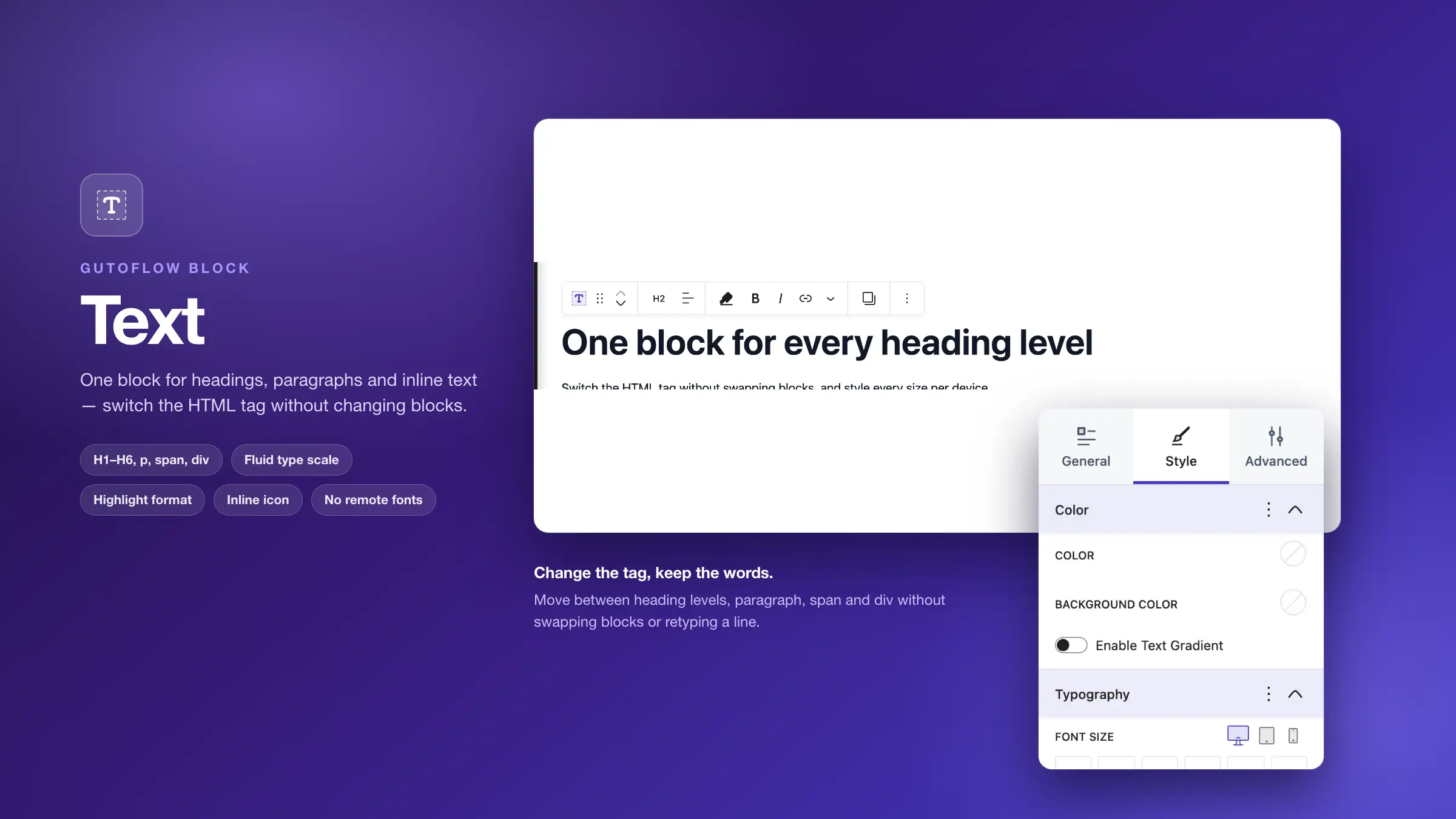
Text
One block for H1–H6, paragraph, span and div. Change the tag without retyping the words.
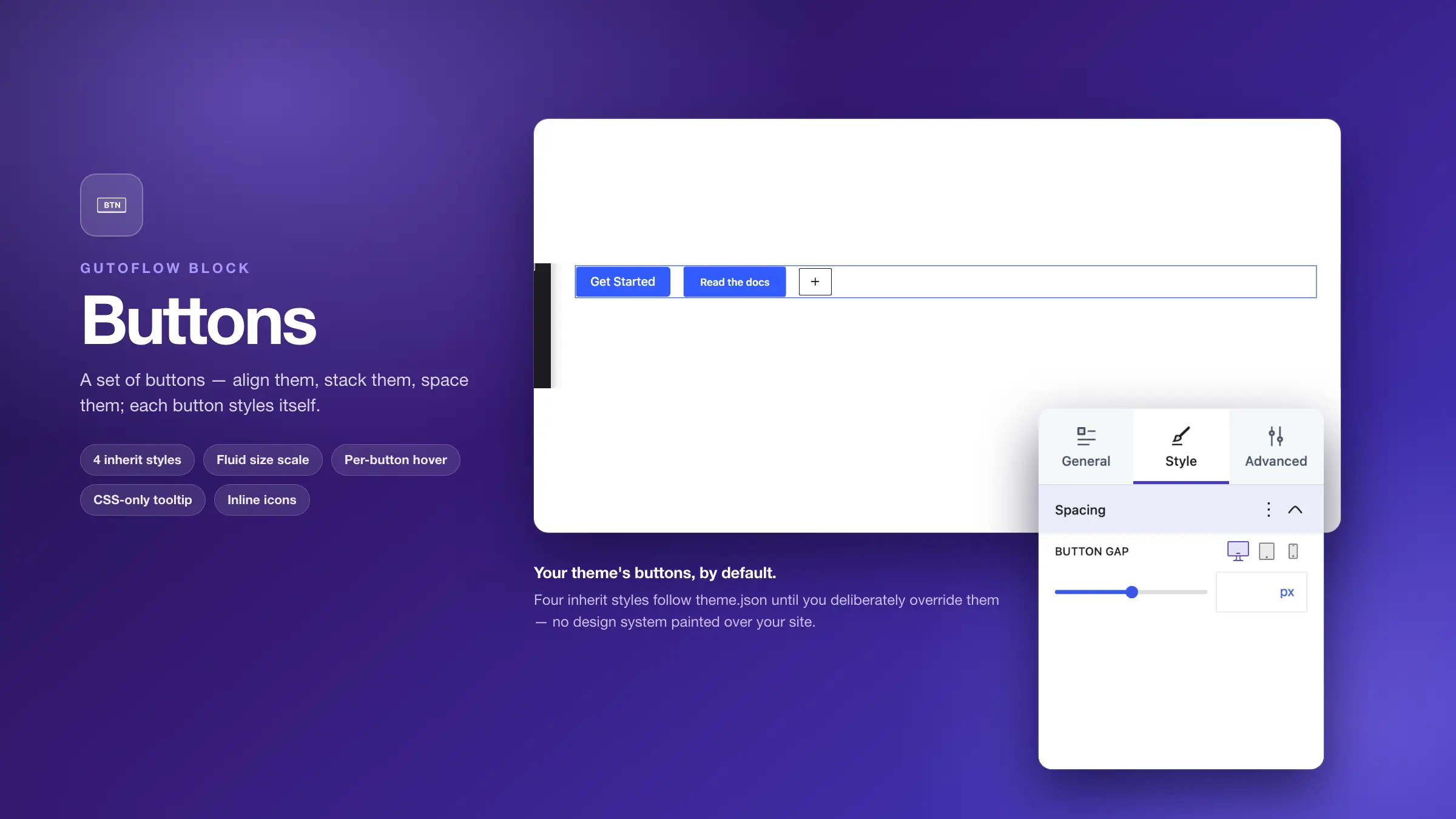
Buttons
A flex row of real wp-element-button links, so they inherit your theme’s buttons by default.
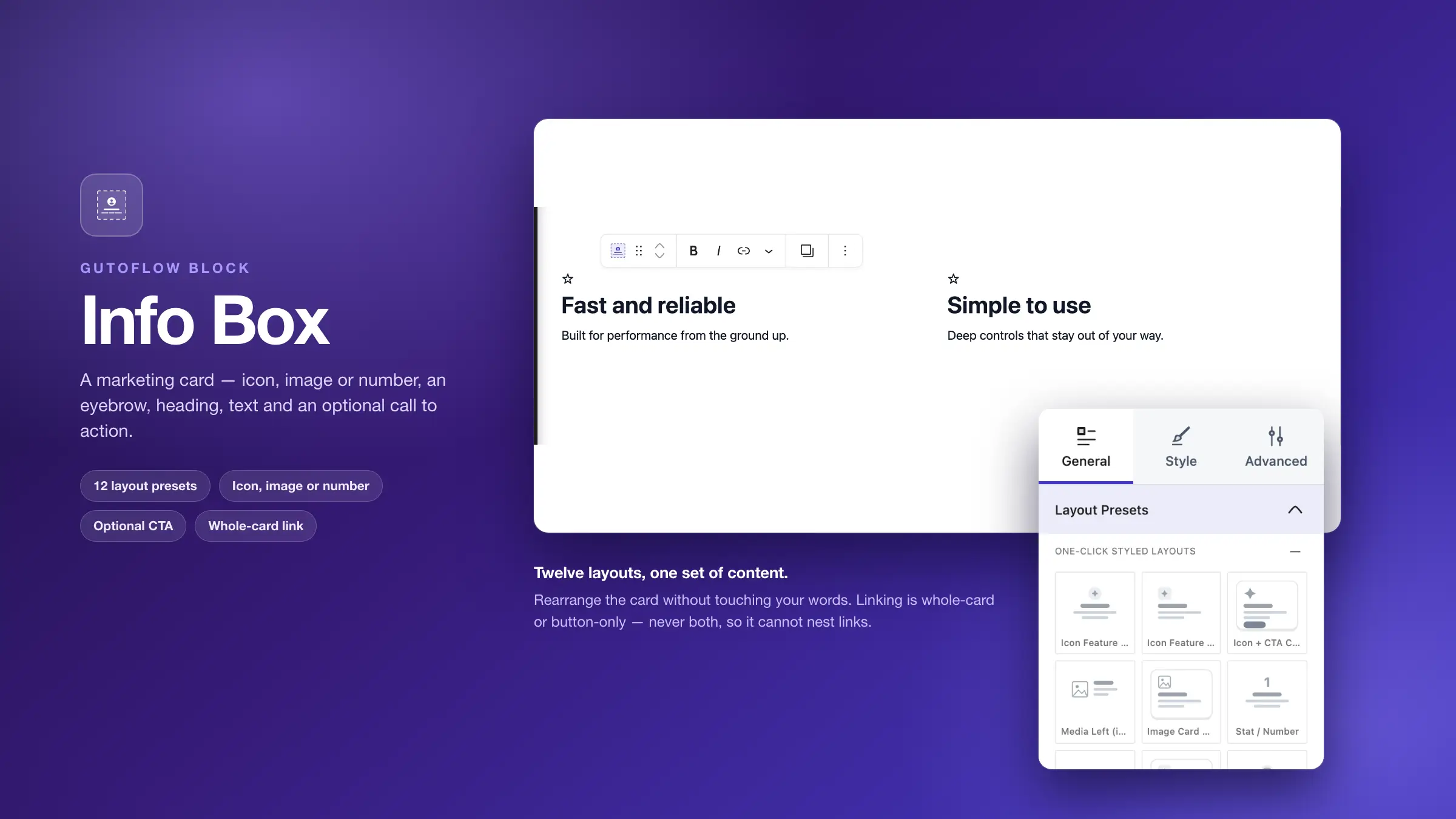
Info Box
Icon, image or number, plus heading, text and an optional call to action. Twelve layout presets that rearrange without touching your content.
Image
Responsive Image Block with advanced customization options
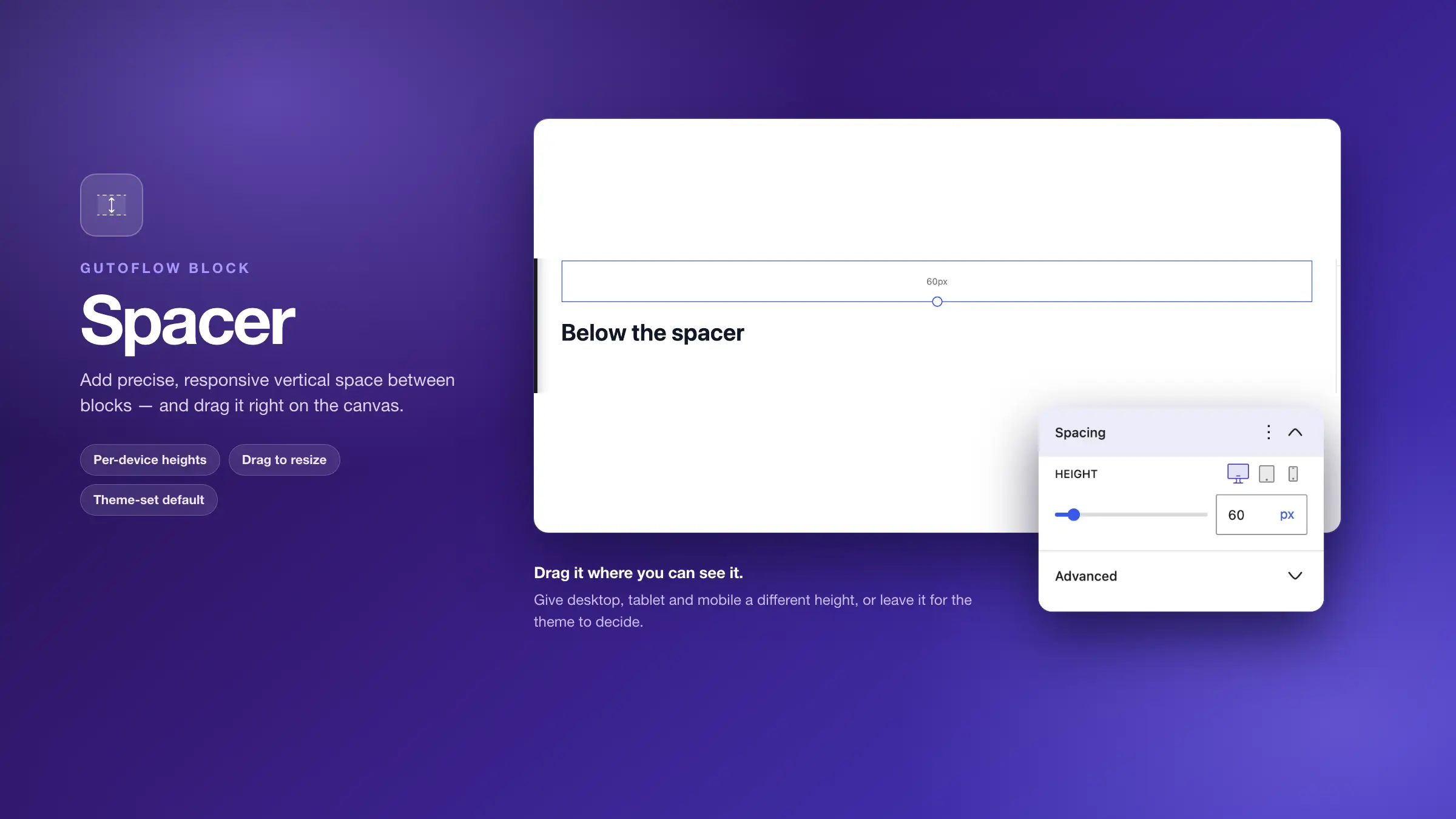
Spacer
Responsive vertical space with per-device heights, and a default your theme can set.
What makes it light
Zero frontend JavaScript
The static blocks ship none — and the test suite asserts it, so it can’t quietly stop being true.
Cacheable CSS files
Styles are written to a real file rather than an inline style block in every page, so browsers and caching plugins can do their job.
Only what you used
A block you didn’t place adds no CSS. A control you didn’t touch adds no markup.
Every feature ships with three sets of docs.
One for the person using the block. One for the developer extending it. One written for AI assistants, so the tool in your editor gets GutoFlow’s markup right instead of guessing. No feature is finished until all three exist and the tests pass.
Where it’s up to
GutoFlow is version 0.1.0 and heading for the WordPress plugin directory. It needs WordPress 6.7 and PHP 8.1, and it’s GPLv2 — like WordPress itself. If you want to follow along, or tell me something’s broken, the source is public and the inbox is real.